Don't miss our holiday offer - up to 50% OFF!
How to Build the Perfect Home Boxing Setup

You don’t need a gym membership or a huge budget to train like a boxer. With the right gear and a little planning, a spare corner of your garage, basement or living room can become a serious training space.

Step 1: Pick Your Space
Boxing needs room to move, not just room to punch. Aim for at least 8 x 8 feet of clear floor, plus about 3 feet of space around a heavy bag so you can circle it. Before you commit, check:
- Ceiling height: Most hanging bags need 8 feet or more.
- Ventilation: Training gets hot and sweaty fast. A window, fan or open garage door helps.
- Noise and neighbors: Heavy bag work is loud, especially in apartments. Ground-floor or garage spaces work best.
Step 2: Choose Your Heavy Bag
The heavy bag is the centerpiece of any home setup, and your main options are:
- Hanging bag: Offers the most realistic feel and swing but needs a ceiling mount or a sturdy beam. Always anchor into a joist, never just drywall.
- Freestanding bag: Fills with water or sand and needs no installation. It’s a good choice for renters and tight spaces, though it can feel less natural to hit.
- Wall-mounted bracket: A good compromise when you lack ceiling access, as long as it’s bolted into studs.
For weight, a common rule of thumb is a bag around half your body weight, typically 70 to 100 pounds for most adults. Too light and it swings wildly. Too heavy and it can hurt your hands and wrists.
Step 3: Protect Your Hands
Never skip protection, however casual your training:
- Hand wraps: Wrap every time to support your wrists and knuckles. Semi-elastic wraps around 180 inches long are a common standard.
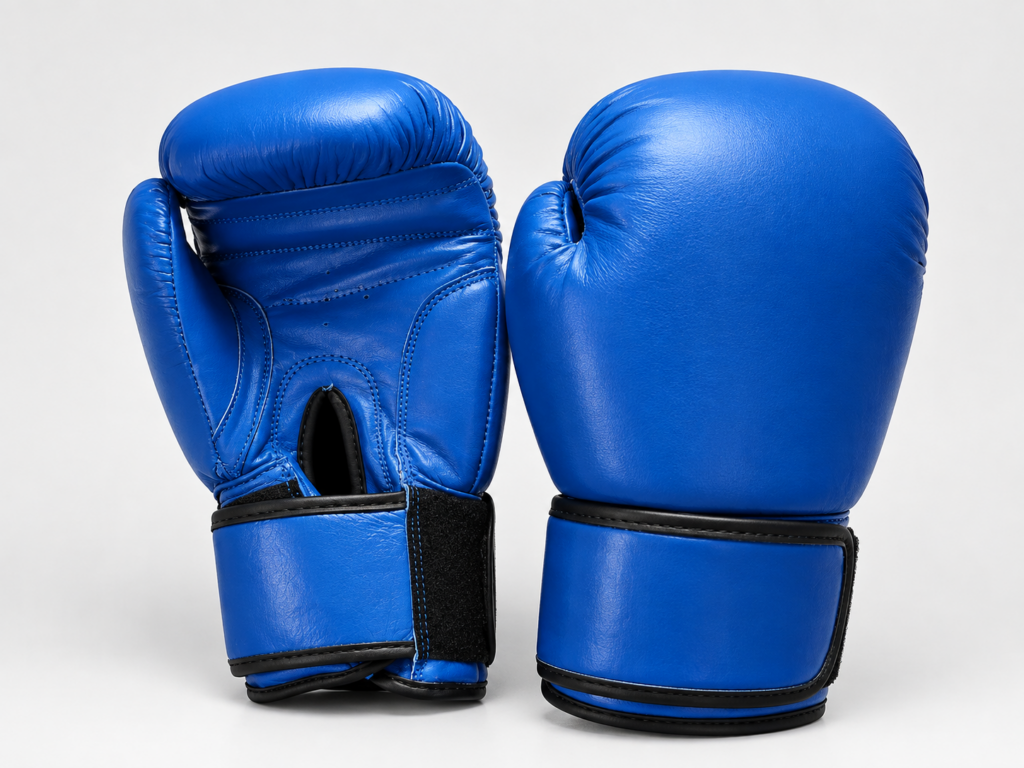
- Bag gloves: 12 to 16 oz gloves are typical for heavy bag work. Heavier gloves protect your hands, while lighter ones suit speed work and pad drills.
Step 4: Add Speed and Skill Tools
Once the basics are covered, add equipment that builds timing, accuracy and footwork:
- Speed bag: Develops rhythm, hand speed and shoulder endurance. It needs a rigid platform, so check that your mount is stable.
- Double-end bag: Sharpens accuracy and reflexes. It’s inexpensive and takes up little space.
- Jump rope: The classic boxing conditioning tool, cheap and effective for footwork and cardio.
- Focus mitts: Useful if you have a training partner to hold them.
Step 5: Get the Floor Right
Boxing is footwork-heavy, and a hard or slippery floor is hard on your joints. Interlocking rubber mats about 3/4 inch thick cushion your steps and protect your concrete or hardwood. Use a surface with enough grip to pivot, but not so much that your shoes stick.
Step 6: Add the Finishing Touches
- A wall mirror: Helps you check your stance, guard and technique.
- An interval timer or app: Set it for standard 3-minute rounds with 1-minute rests.
- Boxing shoes or flat-soled trainers: Light, grippy footwear improves your movement.
- Water, a towel and storage: Hooks or a small rack keep wraps and gloves dry and organized.