Don't miss our holiday offer - up to 50% OFF!
How to Choose the Right Size Boxing Gloves

The right gloves protect your hands, support your wrists, and keep training comfortable. The wrong size can cause pain, injuries, or poor technique. Here’s how to get it right.

1. Understand glove weight (oz)
Boxing gloves are sized in ounces (oz), which measures the padding, not the weight of your hand. Heavier gloves mean more padding and protection. Lighter gloves mean more speed and less cushioning.
2. Match the size to your body weight
Use this as a general starting point:
| Body weight | Recommended glove size |
|---|---|
| Under 120 lb (55 kg) | 8-10 oz |
| 120-150 lb (55-68 kg) | 10-12 oz |
| 150-180 lb (68-82 kg) | 12-14 oz |
| 180-200 lb (82-91 kg) | 14-16 oz |
| Over 200 lb (91 kg) | 16 oz |
3. Choose by training type
- Heavy bag and mitt work: 10-14 oz gives good hand protection with solid feel.
- Sparring: 14-16 oz is the standard, since extra padding protects both you and your partner.
- Competition: Weight is set by the event rules, usually 8-10 oz, so check with your organizer.
- General fitness: 10-12 oz is a comfortable all-rounder.
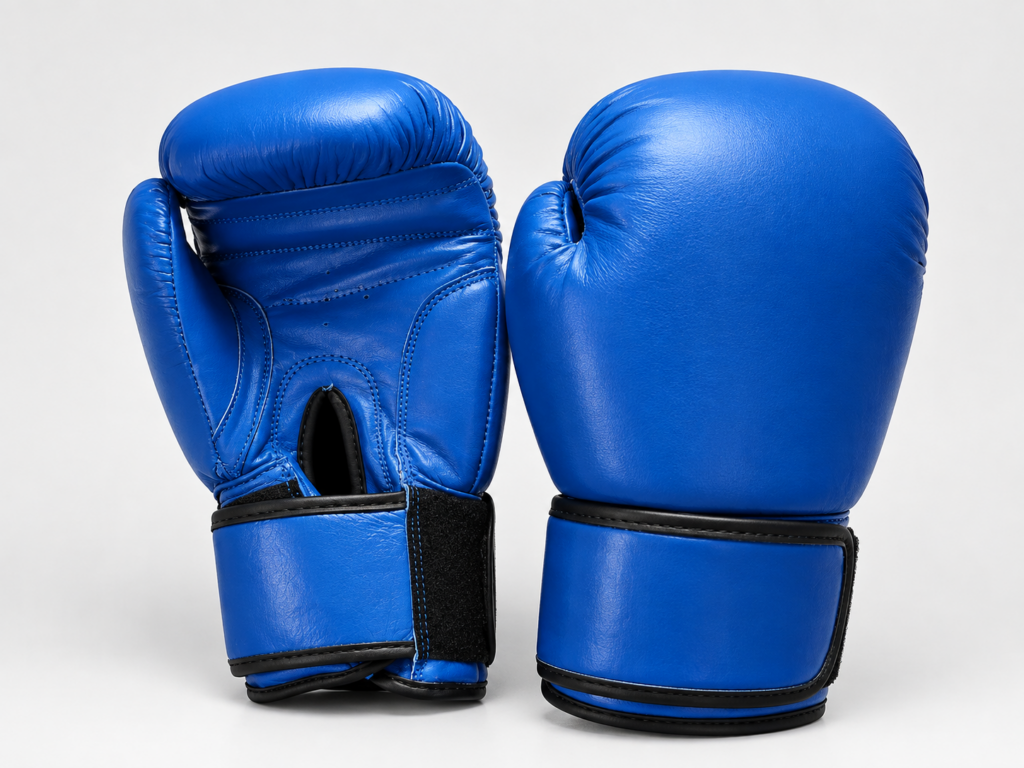
We focus on materials that provide a strong and dependable feel, while thoughtful construction helps products maintain their shape and performance during repeated training sessions. while our bags and pads are made for demanding training routines.
4. Check the fit
- Snug, not tight: Your fingers should reach the end of the glove without curling, and there should be no dead space.
- Wrist support: The cuff should sit firmly around the wrist without cutting off circulation.
- Room for hand wraps: Always try gloves on with wraps, as they add bulk.
5. Pick the closure style
- Velcro: Quick to put on and secure, which is ideal for most training.
- Lace-up: Offers a tighter, custom fit, but you’ll need a partner to help tie them.
6. Consider materials and quality
Genuine leather lasts longer and molds to your hand, while synthetic leather is more affordable and easier to clean. Look for multi-layer foam padding, breathable lining, and strong stitching.
7. Know when to size up or down
If your hands are large or you train often, go up a size for extra protection. For kids and teens, choose based on age and hand size, typically 4-8 oz.